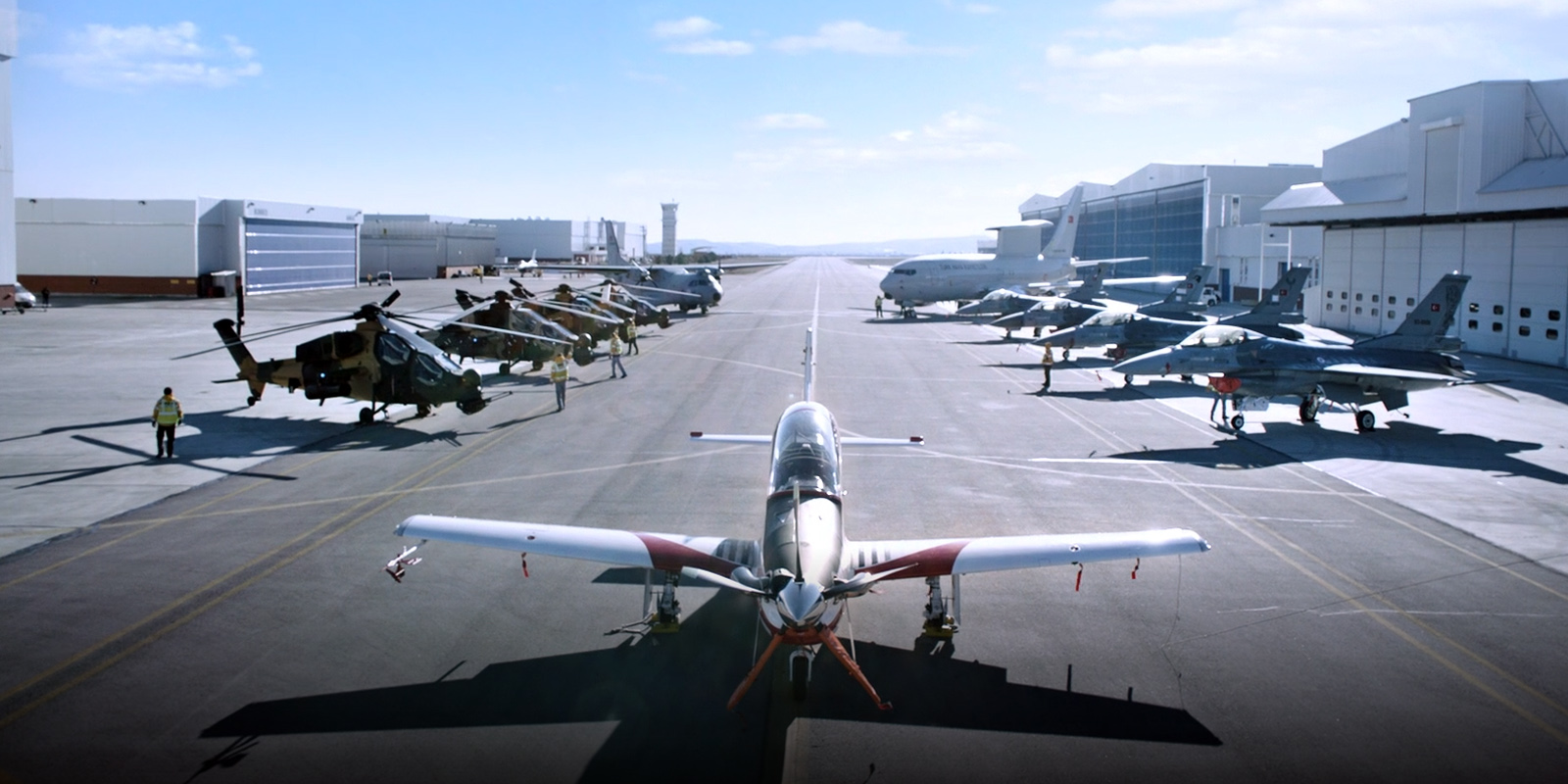
The Turkish defense and aerospace industry has been undergoing a profound transformation over the past decades.
Having achieved unparalleled success in the industry in recent years, today Türkiye has one of the fastest
developing defense and aerospace industries in the world. The experience and emphasis on quality is evident among
Turkish defense and aerospace companies as they undertake numerous endeavors, create products that are competitive
worldwide, and assume important roles in international projects. With their qualified human resources and
state-of-the-art technology infrastructure, Turkish companies bring global solutions to satisfy many countries'
local requirements. These Turkish companies conduct activities in many critical areas of the defense and aerospace
industry, from original design development to domestic production, from modernization to modification, and from R&D
to international projects.
During the establishment of the domestic defense industry infrastructure, the preference was to cooperate and
co-produce with leading countries and associated companies. This enabled many defense projects like the MİLGEM
battleship, the ALTAY Main Battle Tank, ATAK helicopters, and unmanned aerial vehicles (UAV) to be successfully
developed by the national defense industry. Building upon this early experience, Türkiye ventured forth with further
indigenous projects, including the ANKA UAV, the HÜRKUŞ ground attack aircraft, the GÖKTÜRK satellite, a light
utility helicopter, as well as a jet fighter aircraft. In addition, some important sub-systems and technology
development projects have been initiated to support such programs. Today, thanks in part to many of the indigenous
projects it has developed, the Turkish defense industry is quite mature in terms of its capabilities, quality, and
proficiency. The Turkish defense industry both meets the needs of the Turkish Armed Forces and is a known player in
the fiercely competitive international defense market. In the coming years, the industry's share in domestic and
overseas markets is set to increase as important national defense projects are completed.
Türkiye is one of the largest defense spenders in the world. With defense spending of nearly USD 25 billion in 2024,
Türkiye ranked 17th among the world's largest defense budgets. In the past decade, the defense industry's turnover
has tripled, reaching USD 15.1 billion in 2023. Today, more than 3,500 companies operate in Türkiye’s defense
industry. In parallel with Turkish aerospace and defense industry’s growth in the past decade, export and
international cooperation opportunities have increased for Turkish companies. The industry’s exports increased from
USD 1.6 billion in 2013 to USD 7.2 billion in 2024, making Türkiye the 11th arms supplier in the world. Thanks to
its advanced and qualified production capacity, the sector received USD 20.1 billion in orders in 2023. In addition,
whereas defense projects with a budget of around USD 5.5 billion were carried out in 2002, today the project
portfolio of Secretariat of Defense Industries consists of above 1,100 projects with a volume of over USD 100
billion in year 2024.
Over the years, as the fastest recovered country from the pandemic, Türkiye has also emerged as an ideal place for
civil aviation business. The number of airline passengers increased from 34 million in 2004 to 230.2 million in
2024, including 134.7 million international passengers. The size of the airline fleet increased from 162 to 668
between 2003 and 2023, reaching 729 in 2024. Meanwhile, the total number of civilian aircraft climbed from 626 to
1,856 between 2004 and 2023, while it rose to 2,002 as of 2024. During the same period, civil aviation revenue
increased from USD 2.2 billion to around USD 29.7 billion as of 2023 within two decades period. Türkiye has
positioned itself as a hub for civil aviation. Istanbul airport, being the busiest airport in Europe in 2024 in
terms of average daily flights, with a capacity of 200 million passengers per year and flights to more than 350
destinations, is the largest airport in the world with the greatest connectivity.
