Defense & Aerospace

Lorem Ipsum is simply dummy text of the printing and typesetting industry.

Total defense expenditures of Türkiye ​in 2024.​​​

​USD 25 billion​​​

Total turnover of Türkiye's defense and aerospace industry in 2023.​

USD 15.1 billion​

Total export value of Turkish defense and aerospace industry in 2024.​​​​​

​USD 7.2 billion​​​​

Total turnover of Türkiye’s civil aviation services in 2023.​​​

USD 29.7 billion​

​​Number of aircrafts in Türkiye’s civil aviation fleet.

729​

Number of airline passengers in Türkiye in 2024.​​

230.2 million​

​​​​​​​​​
Defense and Aerospace

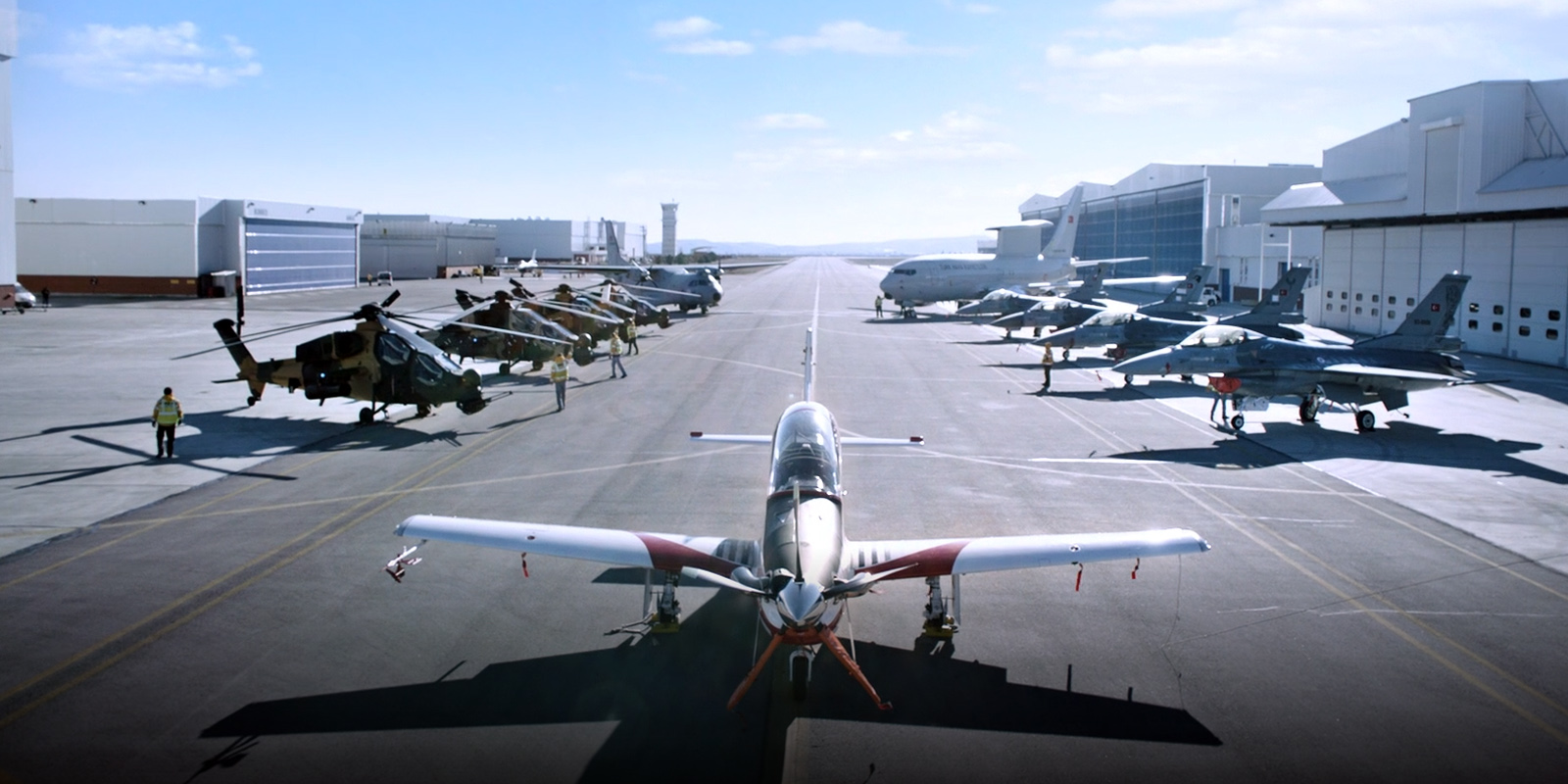
The Turkish defense and aerospace industry has been undergoing a profound transformation over the past decades. Having achieved unparalleled success in the industry in recent years, today Türkiye has one of the fastest developing defense and aerospace industries in the world. The experience and emphasis on quality is evident among Turkish defense and aerospace companies as they undertake numerous endeavors, create products that are competitive worldwide, and assume important roles in international projects. With their qualified human resources and state-of-the-art technology infrastructure, Turkish companies bring global solutions to satisfy many countries' local requirements. These Turkish companies conduct activities in many critical areas of the defense and aerospace industry, from original design development to domestic production, from modernization to modification, and from R&D to international projects.

During the establishment of the domestic defense industry infrastructure, the preference was to cooperate and co-produce with leading countries and associated companies. This enabled many defense projects like the MİLGEM battleship, the ALTAY Main Battle Tank, ATAK helicopters, and unmanned aerial vehicles (UAV) to be successfully developed by the national defense industry. Building upon this early experience, Türkiye ventured forth with further indigenous projects, including the ANKA UAV, the HÜRKUŞ ground attack aircraft, the GÖKTÜRK satellite, a light utility helicopter, as well as a jet fighter aircraft. In addition, some important sub-systems and technology development projects have been initiated to support such programs. Today, thanks in part to many of the indigenous projects it has developed, the Turkish defense industry is quite mature in terms of its capabilities, quality, and proficiency. The Turkish defense industry both meets the needs of the Turkish Armed Forces and is a known player in the fiercely competitive international defense market. In the coming years, the industry's share in domestic and overseas markets is set to increase as important national defense projects are completed.

Türkiye is one of the largest defense spenders in the world. With defense spending of nearly USD 25 billion in 202​4, Türkiye ranked 17th among the world's largest defense budgets. In the past decade, the defense industry's turnover has tripled, reaching USD 15.1 billion in 2023. Today, more than 3,500 companies operate in Türkiye’s defense industry. In parallel with Turkish aerospace and defense industry’s growth in the past decade, export and international cooperation opportunities have increased for Turkish companies. The industry’s exports increased from USD 1.6 billion in 2013 to USD 7.2 billion in 2024, making Türkiye the 11th arms supplier in the world. Thanks to its advanced and qualified production capacity, the sector received USD 20.1 billion in orders in 2023. In addition, whereas defense projects with a budget of around USD 5.5 billion were carried out in 2002, today the project portfolio of Secretariat of Defense Industries consists of above 1,100 projects with a volume of over USD 100 billion in year 2024.

Over the years, as the fastest recovered country from the pandemic, Türkiye has also emerged as an ideal place for civil aviation business. The number of airline passengers increased from 34 million in 2004 to 230.2 million in 2024, including 134.7 million international passengers. The size of the airline fleet increased from 162 to 668 between 2003 and 2023, reaching 729 in 2024. Meanwhile, the total number of civilian aircraft climbed from 626 to 1,856 between 2004 and 2023, while it rose to 2,002 as of 2024. During the same period, civil aviation revenue increased from USD 2.2 billion to around USD 29.7 billion as of 2023 within two decades period. Türkiye has positioned itself as a hub for civil aviation. Istanbul airport, being the busiest airport in Europe in 2024 in terms of average daily flights, with a capacity of 200 million passengers per year and flights to more than 350 destinations, is the largest airport in the world with the greatest connectivity.​

​

Related Documents

APR 01, 2026

Defense and Aerospace Industry Report

View PDF PDF - 6.8 MB
SEP 01, 2026

Investitionsstandort Türkiye (German Edition)

View PDF PDF - 5 MB
JUN 01, 2026

Guide to State Incentives for Investments in Türkiye

View PDF PDF - 2.6 MB
SEP 01, 2026

Why Invest in Türkiye (French Edition)

View PDF PDF - 9 MB
SEP 01, 2026

Why Invest in Türkiye

View PDF PDF - 5.1 MB
SEP 01, 2026

Why Invest in Türkiye (Arabic Edition)

View PDF PDF - 4.8 MB
MAY 22, 2026

Investment & Finance in the Türkiye Century

View PDF PDF - 12.6 MB
FEB 01, 2025

Türkiye's FDI Landscape at a Glance 2024

View PDF PDF - 39.7 MB
SEP 01, 2024

Foreign Direct Investment in Türkiye Century

View PDF PDF - 13.6 MB
JUL 01, 2024

Invest in Türkiye Roadshow

View PDF PDF - 21 MB

Success Stories

View All

​​​​​​​​​​GE is the world's digital industrial company – transforming industry with software-defined machines and solutions that are connected, responsive and predictive. GE is organized around a global exchange of knowledge, the "GE Store," through which each business shares and accesses the same technology, markets, structure, and intellect. Each invention further fuels innovation and application across various industrial sectors. With people, services, technology and scale, GE delivers better outcomes for customers by speaking the language of industry. ​GE has been powering, improving, and constructing with its activities in Türkiye for nearly 70 years. Since its entry into the Turkish market in 1948, GE has expanded through the formation of strong partnerships, invested in innovation, technology and local capacity, and solved some of the country's toughest technological problems, such as reliable electricity, healthcare, and transportation. GE is headquartered in Istanbul and has facilities in five cities staffed by approximately 2,300 employees. History of GE Türkiye 1948: GE became one of the first foreign industrial ventures in Türkiye when it established a light bulb factory in cooperation with the Koç Group. 1985: TUSAŞ Engine Industries (TEI) (46% GE), a high-technology investment in cooperation with the Turkish government. The enterprise, which is the foundation of Türkiye's aircraft engine industry, is now a world-class facility that employs 1,900 people. 2000: Marmara Technology Center (MTC) (100% GE) is an aircraft engineering technology center for construction and control technologies located at the TUBİTAK campus in Gebze, Kocaeli. 2007: An engineering agreement was signed between Türkiye Technology Center (TTC), TUSAŞ Engine Industries (TEI), and GE MTC, which focuses on R&D, design, and development of new technologies for aircraft engines. 2008: GE Healthcare's Eastern and Africa Growth Markets (EAGM) region selected Türkiye for its headquarters. 2008: The TÜLOMSAŞ Strategic Partnership – a memorandum of understanding signed by GE Transportation and TÜLOMSAŞ – was established to supply GE's PowerHaul™ series locomotives manufactured in Eskişehir. 2010: The partnership agreement signed between TEI's Turkish partners, Turkish Aerospace Industries Inc. (TAI), the Turkish Armed Forces Foundation (TAFF), the Turkish Aeronautical Association (TAA), and GE on January 10, 1985, was extended for another 25 years. 2011: The TÜLOMSAŞ Strategic Partnership completed the assembly of the first locomotive in Eskişehir. 2012: The Repair Development Center, established in 2012 as a joint initiative between TUSAŞ Engine Industries (TEI) and GE Aviation, was inaugurated to help better serve the aviation and energy industry in Gebze. 2014: GE's sole Aviation Coating Primary Laboratory was opened at TTC to focus on R&D into new testing methods that will enable aircraft engine parts to complete their projected lifecycle seamlessly for the Aviation Supply Chain. 2015: GE acquired Alstom's energy businesses globally. After this acquisition, GE's number of employees in Türkiye reached nearly 2,000. 2016: GE Healthcare was awarded 4 Türkiye integrated health campus PPPs valued at approx. USD 223 million by Dia, Gama, and Türkerler. 2016: Activities and investments were initiated to convert GE's Power Transformers factory into a more efficient facility, with gains of up to 30% additional efficiency expected in the coming years. 2017: LM Wind Power, a GE Renewable Energy business and a leading designer and manufacturer of wind turbine blades, began production at new wind turbine blade plant in Bergama, Izmir. The facility is expected to manufacture and distribute an annual capacity of 500 megawatts (MW), with the capability to expand to 1,500 gigawatts (GW). ​ GE Türkiye in figuresEvery two minutes, an airplane equipped with parts manufactured in Eskişehir takes off in the world.GE/CFM engines power more than 60 percent of all airplanes in Türkiye.More than one-quarter of the total power production in Türkiye is generated through GE's cutting-edge technology gas, wind, hydro, steam turbines, or biogas engines.More than 20,000 GE Healthcare technologies help doctors and patients every day.Türkiye Technology Center, with over USD 10 million in investment and more than 400 world-class engineers, has combined for over 5 million engineering hours to date. TTC is the design owner of the gas turbine product line up to 100 MW, which is used in commercial and military ships, industrial power plants, oil platforms, and pipelines.​​​

Read More

​​​​​​​​​​​MAN began operations in Türkiye in 1966 via the MANAŞ (MAN Kamyon ve Otobüs Sanayi A.Ş.) partnership, which was established between the Ercanlar Company and MAN Truck & Bus. The plant in Istanbul was MAN's first production plant outside of Germany. 1967 saw the first trucks rolling off the line, with buses following in 1968. The first exports of MAN vehicles from Türkiye was in 1981 to countries in the Middle East, including Egypt, Kuwait, Syria and Lebanon. In the 80's, the company established the MAN Engine factory in Ankara, which in addition to engines, also began producing buses in 1985. MAN Truck & Bus acquired complete administrative and industrial management of MANAŞ in 1995, and the engine factory was purchased in 1996. All bus production was transferred from Istanbul to Ankara, and all production facilities were incorporated in Ankara under the new name MAN Türkiye A.Ş. (MAN Türkiye). MAN Türkiye developed the MAN and NEOPLAN branded intercity buses and coaches at its giant 317,000-square-meter production center in Akyurt, Ankara. Through the “Evolution 2004" project, in a bid to increase productivity, the Ankara factory reached a capacity of 2,000 buses per year. Today it is MAN's largest bus production facility. MAN Türkiye completed its R&D center in 2012, which brought the design, test, and analysis groups under a single roof. Numerous development projects have been implemented recently, lending strength to the company in the long-term competitive environment. MAN Türkiye's investments and major developments in recent years have had an noticeable effect on quality and efficiency. The company decided that production of NEOPLAN – one of the world's premium bus brands – will take place only at MAN Türkiye's plant in Ankara. MAN Kamyon ve Otobüs Ticaret A.Ş. MAN Kamyon ve Otobüs Ticaret A.Ş carries out sales and after-sales services for MAN-branded buses and trucks and NEOPLAN-branded buses. The company is continuously raising its level of success in sales and marketing activities primarily through 18 dealers and 6 MAN TopUsed Centers across Türkiye. MAN Kamyon ve Otobüs Ticaret A.Ş. strives to give the best after-sales service through 32 service centers and plaza buildings, all while growing market share and striving for high customer satisfaction. Some significant firsts by MAN in Türkiye 1966: A factory was established in Istanbul, making it the first production plant outside of Germany. 1967: The first MAN-branded truck rolled off the production line in Istanbul. 1981: MAN Türkiye made its first exports. 1986: MAN manufactured the first articulated bus in Türkiye. 1995: Production was incorporated in Akyurt facilities in Ankara. 1999: MAN manufactured the first long-distance bus with three axles in Türkiye. 2006: MAN manufactured the first bus powered by natural gas in Türkiye. 2011: MAN opened the largest cathode electro-painting plant in Europe. 2012: MAN opened its R&D center. 2014: Decision taken to produce all NEOPLAN models in Türkiye. 2015: World launch held for MAN Lion's Intercity model designed and produced in Ankara. MAN Holding The MAN Group is one of Europe's leading commercial vehicle and mechanical engineering groups. MAN is a supplier of trucks, buses, vans, diesel engines, turbomachinery, and special gear units and focuses on activities in the areas of transportation and energy - market segments that offer long-term, global opportunities. MAN's business activities are grouped into two business areas: Commercial Vehicles, comprising MAN Truck & Bus and MAN Latin America, and Power Engineering, featuring MAN Diesel & Turbo and Renk. MAN's divisions hold leading positions in their markets. With a headcount of 53,824 employees, the group operates in more than 180 countries. In the 2016 reporting period, the MAN Group generated sales revenue of EUR 13.6 billion. ​MAN can look back on a corporate history of more than 250 years. MAN Group's guiding principles create a framework for responsible conduct on the part of all MAN employees, which is mandatory to uphold the principles of sustainability. MAN's new corporate values of respect, customer focus, team spirit, determination, and integrity play a key role in its success in product markets and the capital market, as well as in attracting qualified employees, and in social acceptance of all business activities. ​

Read More

​​​​​​​​​​Founded by Werner von Siemens in Germany in 1847, Siemens started its operations in Türkiye shortly thereafter upon the Ottoman Empire's decision to introduce the telegraph system to the country. Then named Siemens Halske, the company started its first project in Türkiye by establishing the Istanbul Telegraph Centre. Siemens' investments continued during the following years, and the construction of the telephone infrastructure continued even in times of war.Siemens made electricity a part of city life. Turkish society has been enjoying services such as electricity, telephone and telegraph communication, and street lighting provided by Siemens. The presence of Siemens in the field of telecommunications in Türkiye started with the telex project undertaken with the Turkish post office PTT in 1950s, and which was completed in 1960.Siemens contributed to Türkiye's development process by establishing Simko in partnership with the Koç Group in 1959. By 1961 Simko had already set up its first factory in Kartal, Istanbul. From then on, the company's fast growth contributed significantly to Türkiye's rapid industrialization.In 1986, Siemens laid the fiber optic cables of the Bosphorus Bridge. In 1990, Siemens became one of the strongest infrastructure providers of the GSM industry of Türkiye. In the same year, Siemens also obtained the first ISO 9001 Quality Systems Certificate in Türkiye, and the ecofriendly practices of Siemens were certified with the ISO Environmental Award in 1995.In 2001, all Simko shares were acquired by Siemens, and its name became Siemens Sanayi ve Ticaret A.Ş, also known as Siemens Türkiye. Siemens Türkiye continues its activities in Kartal, Istanbul on a 90,000 square meters of area and in its Gebze facilities located on an area of 150,000 square meters. Gebze facilities are the first in Türkiye to be certified with the LEED Gold standard (Leadership in Energy and Environmental Design).Siemens has been the first to introduce many innovative technologies to Türkiye in the fields of energy, infrastructure, electrification, automation, digitalization, and healthcare. Using its experience and knowledge gained over 161 years, Siemens Türkiye today guides the country in Industry 4.0 initiatives. With more than 3,000 employees, Siemens Türkiye's indirect employment reaches 40,000 people. ​Investing heavily in R&D, Siemens opened its 14th R&D center in Türkiye. Siemens Türkiye's investment of approximately TRY 60 million in R&D in 2015 is 1.6 times the average in the country.Also attaching immense importance to social contribution, Siemens Türkiye implements many corporate social responsibility and sustainability projects, ranging from the 18-year-old Siemens Opera Contest to robotic clubs, scholarships, donations, and projects for refugees.​​

Read More